Efter 47 års iransk terroregimente sagde USA’s 47. præsident endeligt stop.
Stephen A. Schmidt fortalte engang om et forretningsråd som Trump havde givet ham: Hvis man låner en million i banken og ikke kan betale det tilbage, har man et stort problem. Hvis man låner 100 mio og ikke kan betale tilbage, har banken også et stort problem. Derfor vil de gøre deres bedste for at dit projekt vil lykkes. Irans angreb på sine arabiske naboer har ikke blot isoleret dem helt, men har også befæstet Abraham Aftalerne, der var en af Trumps største udenrigspolitiske bedrifter fra hans første præsidentperiode.
Eksil iraneren Armin Navabi mener at en “liberation of Iran will completely destroy the lie that Israel is the enemy of the region” og vil således yderlige konsolidere Abraham Aftalerne. Den arabiske gade har været helt stille siden aftalerne blev underskrevet i 2020. End ikke Israels grundige nedkæmpelse af Hamas i Gaza har givet anledning til den mindste utilfredshedens dag, som man så det under operationer som Kast Bly. New York Times skrev
The U.S.-Israeli war against Iran has fractured the Iranian government, complicating its ability to make decisions and coordinate larger retaliatory attacks, according to officials familiar with U.S. and Western intelligence assessments.
Several dozen Iranian leaders and their deputies have been killed since the war began four weeks ago. Those who survive have had difficulty communicating and are unable to meet in person, for fear of having their calls intercepted by the United States or Israel and being targeted in an airstrike.
While Iran’s security and military agencies continue to function, the government’s ability to plan new strategies or policies has been weakened.
The Trump administration has said a new government is in charge in Iran and has pressed it to make a quick deal. But the more degraded Iranian government decision making becomes, the more difficult it will be for it to negotiate with American envoys or make significant concessions.
Ved at skære den øverste ledelse væk, er der ingen koordinering i det iranske svar. Det er givetvis derfor at de begyndte at fyre missiler af i alle retninger og således gøre alle deres venner til fjender. Hvilket sjovt nok er hvad iranerne har øvet sig på. “Rather than triggering immediate disintegration, the loss of the decision-making center appears to have accelerated the activation of a mechanism of military resilience already embedded in Iranian strategic doctrine.” skrev Cherkaoui Roudani i Geostrategic Media
In such an architecture, military capability is no longer organized around a single decision-making nucleus whose destruction would precipitate systemic collapse. Instead, it relies on a distribution of command, capabilities, and operational initiative across a multiplicity of interconnected tactical centers. In this configuration, strategic decapitation does not lead to the disintegration of the military system; rather, it tends to diffuse the confrontation across the operational space.
Therefore, the war has gradually shifted toward a decentralized, regional, and distributed configuration corresponding to what Iranian strategists have described for several years as Mosaic Defense. Within this framework, the decapitation of the center does not necessarily translate into the collapse of the politico-military system. On the contrary, it can activate a process of command diffusion in which operational authority is redistributed among several tactical centers capable of acting with relative autonomy. In this regard, Iran’s foreign minister has hinted that some regional strikes are now conducted by dispersed military commands operating according to the logic of Mosaic Defense rather than under centralized political direction.
(…)
Mosaic Defense occupies a central place in Iranian strategic thinking. Its principle is straightforward: fragment the operational space in order to make the simultaneous neutralization of the entire military apparatus impossible. The deeper origins of this strategic logic can be traced back to the Iran–Iraq War (1980–1988). That conflict profoundly shaped Iran’s military thinking, demonstrating the vulnerability of centralized command structures confronted with superior conventional forces. Over eight years of war, Iranian strategists learned that survival depended less on decisive victories than on endurance, dispersion, and the capacity to absorb shocks over time.
These lessons were reinforced in the early 2000s. The U.S. campaigns in Afghanistan and Iraq once again demonstrated the vulnerability of centralized regimes confronted with overwhelming conventional power. Iranian strategists drew a clear conclusion: survivability in modern war would depend not on defending the center but on dispersing power across multiple operational nodes. Over the following two decades, the Islamic Revolutionary Guard Corps gradually developed a strategic architecture designed to function precisely under conditions of decapitation and strategic shock. This evolution ultimately laid the foundations of what Iranian strategists today describe as Mosaic Defense.
Within this architecture, the survivability of the system depends less on protecting a single center than on its capacity to recombine through dispersion. In this respect, the Iranian approach presents striking parallels with the concept of Mosaic Warfare developed by DARPA in American strategic thought, which likewise aims to disperse military capabilities into modular units in order to enhance resilience against strikes targeting critical nodes. In practice, Mosaic Defense distributes operational authority. The system is organized into a multitude of autonomous tactical cells deployed across different sectors, capable of acting independently while remaining guided by pre-established strategic directives. When the center is struck, the periphery becomes the center: military power does not disappear—it redistributes itself.
“It is coercive diplomacy” skrev Mehdi Parpanchi for et par uger siden, før de ‘fejlslagne’ forhandlinger “terms first, pressure second, pause third, then renewed pressure from a stronger position”. Det er lidt lettere at se for sig, nu man ved at ledelsen ikke blot er fragmenteret, interne stridigheder til side, så vil der også være konkurrerende fraktioner, mellem fanatikerne, pragmatikerne og de korrupte, der må regnes mere til pragmatikerne.
For two decades, Washington tried different ways to stop the Islamic Republic’s nuclear advance. Some administrations leaned more on sanctions. Others leaned more on diplomacy. Some tried both. Yet through all of it, the Islamic Republic moved from zero enrichment to 60 percent. By June 2025, the IAEA said Iran had 440.9 kilograms of uranium enriched to that level, enough for multiple nuclear bombs if enriched further. At the same time, the IRGC’s missile stockpile grew, its range and destructive power increased, and those capabilities spread to proxies from Lebanon to Iraq and Yemen. That was the result of the old approach.
(…)
Trump’s answer was different. He was no longer trying to manage the problem or secure another temporary arrangement. After returning to office in January 2025, he demanded rollback: an end to enrichment, limits on the missile programme, and the dismantling of the proxy network through which the Islamic Republic had built regional power. Tehran refused, as it had through two decades of diplomacy and negotiation. The result was a shift from bargaining to attrition. The regime began to lose, by force, the very instruments through which it had built deterrence and projected power. In that sense, coercion was producing the rollback that diplomacy had failed to secure.
The 12-day war began in June 2025, after diplomacy failed and Israel struck the Islamic Republic’s nuclear and military infrastructure. The attack came at the end of a two-month negotiating window set by Trump. It marked the shift from coercive diplomacy to open war.
Trump stopped the war after twelve days. That pause, too, was part of the strategy. The June war did not target the political leadership. It was meant to shock the regime and force a choice, while giving its political leaders time to assess the damage and decide whether saving the system now required giving up some of its strategic assets.
Ida Turan tilføjer med lidt historie
About ten years ago, the late Iranian-American analyst Manook Khodabakhshian predicted these exact days in detail. He described the Islamic Republic as a “small Islamic Soviet Union” that would be pushed toward internal collapse through external pressure that would deepen the existing cracks until the system imploded from within. He believed this would be the least costly, least risky, and least bloody path.
The similarities are striking. Both systems were highly ideological and totalitarian, extremely inefficient, and relied on heavy violence and external threats to maintain power and create deterrence. Both poured enormous resources into exporting their ideology and supporting proxies while their economies collapsed. And both turned their nuclear programs, or ambitions for them, into an existential burden. The Soviet Union exhausted itself in the arms race, and Iran is doing the same today.America played a very similar role back then.
In the 1980s, the U.S. placed a massive naval presence around the Soviet Union, dramatically increased military spending, launched the Strategic Defense Initiative, and openly supported internal dissidents and opposition movements.
Der er selvfølgelig en forskel, bemærker Turan da “this regime is not just another leftist dictatorship, it is a cult-like Islamic ideology mixed with apocalyptic and suicidal tendencies” Derfor forestiller hun sig noget der “more closely resembles the Egyptian model: an El-Sisi scenario. A pragmatic, security-minded figure who steps in, uses force if necessary to neutralize the hardliners, restores order, and creates the space for a controlled transition.”
Så hvem forhandler USA så med? Betyder det noget? Der skal bare ske temposkift, så fraktionerne får tid nok til at bebrejde hinanden for nye fadæser og de forskellige dagsordner bliver udkrystalliseret. “Going into the talks, the Iranians acted as if they had the upper hand” skrev Eli Lake i The Free Press.
Iran’s threats to international shipping through the vital choke point of the Strait of Hormuz threatened to send the global economy into a tailspin. Trump said he had an agreement before the talks for Iran to open the strait in exchange for a ceasefire. But when the negotiations began, the strait remained largely closed.
This may have led Iran’s regime to conclude that Trump had no taste for using the military to remove the threat. That assumption proved false.
(…)
So Iran’s bluster and threats have failed. It’s a new experience for the mullahs. In the last major negotiations with the U.S. under President Barack Obama, the Iranian side exploited the president’s fear that a military confrontation was likely if the talks failed. At the close of those negotiations in 2015, Secretary of State John Kerry delivered an emotional speech, fighting back tears, in which he explained that after he went to war in Vietnam, he never wanted to go to war again.
That signaled that Obama wanted to avoid a war with Iran more than he wanted to end Iran’s ability to produce a nuclear bomb. As a result, that 2015 agreement allowed Iran to keep its industrial-scale uranium enrichment program in exchange for temporary limits on enrichment, international inspections, and a promise not to use its centrifuges to make weapons.
Nu har USA blokeret Hormuz strædet for iransk trafik,fortæller Jesse Watters, mens de første handelsskibe er begyndt at tage chancen. Trump har vendt det sidste store trumfkort, det iranske regime havde, nemlig Hormuz, til en amerikansk fordel. “An amazing card trick” kaldte Victoria Coates det hos Jesse Watters, et synspunkt Britt Hume delte. Og han fik med forhandlinger også demonstreret, at der ikke er nogen tvivl om, at iranerne, altså regimet, insisterer på at have atomvåben. Krigen er dermed fuldkommen legitimeret og i alles interesse.
Glenn Beck spekulerede i, at iranerne var hensunket i illusioner skabt af den interne amerikanske oppositions propaganda og regnede med, at det ville presse Trump til indrømmelser.
They watched our weariness after Iraq. Our divisions after Afghanistan. They think that time and higher gasprices are gonna do what their navy could never do. Sounds familiar? It should. It’s what happened with the barbary pirates. Barbary pirates, north african states backed by the Ottoman Empire seizing American ships, enslaving our sailors, demanding tribute.. Jefferson said; ‘I’m not paying anymore’. Because 20% of our budget was going to the muslim pirates. So we build a navy and the marines and we send them over there
Meget af den opposition er skabt på nettet af udenlandske aktører, men medier og akademikere er selvkørende i løgne og illusioner, som Armin Rosen(penis) skrev i The Free Press
Today, if you were to consult much of the media, you would get the impression that Iran is handing America a humiliating defeat. “America Lost. Iran Won. Trump Shat the Bed,” moaned Jonathan V. Last in The Bulwark on April 2. “Advantage Iran,” blared the cover of The Economist on March 26. Iran is “winning the war,” said Rep. Seth Moulton of Massachusetts on Friday, shortly after Iranian forces shot down two U.S. planes.
The mandarins of American media and academia have concocted a narrative that is entirely out of sync with reality. The U.S. and Israel have been killing leading regime figures almost every single day for the past month. The Iranian death toll now includes most of the country’s senior military officers, its head of state, and many of its top strategic minds. That Economist headline came a day after the Israelis struck a facility for advanced munitions production at Parchin, and the same day the regime announced it would accept volunteers as young as 12 for certain military roles with the Islamic Revolutionary Guard Corps. On Thursday, the U.S. destroyed the B1 bridge outside Tehran, which Iran was intending to use, according to U.S. officials, as a supply route for its missile and drone forces. Israeli bombs have rubbled Iran’s once-significant steel and petrochemical facilities. And by this Sunday morning, the U.S. has rescued all three airmen recently downed by Iranian forces.
(…)
Still, many experts and commentators seemed dazzled by Iran’s potential for maritime blackmail. “To the Iranians, the Strait of Hormuz now matters more than the nuclear program,” the Johns Hopkins University professor and former Obama administration official Vali Nasr mused to The Wall Street Journal. “The nuclear program was symbolic, but didn’t provide them with any deterrence.” “Iran’s power is increasing,” writes University of Chicago professor Robert Pape, because of the Islamic Republic’s supposed ability to make oil flows “vulnerable and unreliable.”
Thus the regime that has so cunningly baited the United States into defeat was also dumb enough to have spent half a trillion dollars on an apparently “symbolic” nuclear program—and far more as a result of sanctions and international isolation—when it could’ve just harassed its neighbors’ oil tankers instead. Piracy-as-statecraft surely would have been far less of a hassle than a hardened, underground bomb fuel operation, nearly all of which is in ruins now.
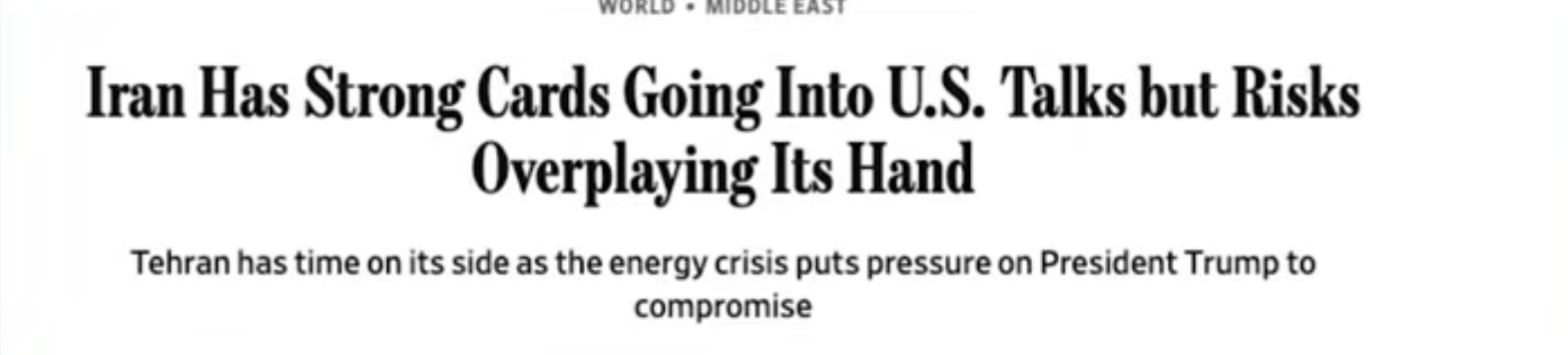
Det er den logik, som fik Trump til at spekulere på, om der var tale om landsforræderi, at levere ‘aid and comfort to the enemy’. Men det er der ikke, uhæderligt og usympatisk, som det ellers er.
Der er ingen folkelige kontrakt mellem det iranske regime og det iranske folk, der er ingen legitimitet. Som Hitler (det er den eneste historiske reference for tiden), der hellere ville ofre det tyske folk på sin personlige visions alter, som alt var tabt i krigens sidste dage, er det iranske styre en muslimsk dødskult, der holder et helt folk (eller flere, som Iran er en multietnisk størrelse) som slaver minder Karim Sadjadpour om i The Atlantic, et stærk anti Trumpsk tidsskrift. “Iran’s 86-year-old supreme leader, who believes that he represents God’s will on Earth, ordered what now appears to be one of the deadliest two-day mass slaughters in modern history”
The terms of this lease—imposed by the landlord upon the tenants—are nonnegotiable:
You, the tenant, will live inside the religious fever dream of a man, Ayatollah Ruhollah Khomeini, who viewed the state not as a vessel for national advancement, but as a weapon for personal retribution, and whose copious writings offered detailed pronouncements about the religious penalties for fornicating with animals, yet no insights on how to run a modern economy. “Economics,” he once said, “is for donkeys.”
You will be ruled for four decades by his successor, Khamenei, whose views will remain fixed no matter how much the world, and Iranian society, changes. He will preach resistance and pretend he is a pious man who eschews worldly wealth. But an entity called Setad—a shadowy financial empire under his personal control—has amassed assets valued at more than $95 billion in 2013 and potentially exceeding $200 billion today, much of it confiscated from Iranians who fled political and religious persecution.
We, the landlord, will micromanage your personal life. Whom you love, the movies you watch, the music you listen to, what you drink—all will be subject to our approval. Under our Sharia-based laws, women will be stoned for adultery, while men are permitted to take multiple wives.
(…) Our national slogans will be “Death to America” and “Death to Israel,” never “Long Live Iran.” As Khomeini once put it, “Patriots are useless to us. We need Muslims. Islam is opposed to patriotism.” While we chant these slogans, we will send our own children to study in the West.
“Iran has been consistent: Its ideology is resistance, its strategy is chaos, its endgame is survival” skrev han i en tråd på X, hvor han advarede Trump om at regne Iran som en rationel stat. Derfor gav han ikke meget for den amerikanske regerings, Trumps faktisk, forsøg på at bombe det iranske regime på plads, for det materielle ikke interesserer dødskulten. En pointe han havde udtrykt sidste år i New York Times, da amerikanerne havde bombet atomanlægget i Furlong
Long before Israel’s invasion and Mr. Trump’s strikes, the Islamic republic resembled a zombie regime, ideologically dead but still repressive, much like the late-stage Soviet Union. Despite the country’s vast human capital and resources, Tehran’s theocrats preside over an economically isolated, socially repressive police state — elbow-deep in corruption and repression, yet ruling from the moral pedestal of an Islamist theocracy. The regime’s enduring slogans, “Death to America” and “Death to Israel” — never “long live Iran” — have long made clear that its priority has always been opposing others, not uplifting its own people.
(…)
Today, the regime most likely has the support of less than 20 percent of society, but up until now it has maintained a highly armed, organized repressive apparatus willing to kill en masse. By contrast, the regime’s far more numerous opponents are unarmed, unorganized and unwilling to die en masse. The state venerates martyrdom; the larger society aspires to separate mosque and state. This disparity has enabled the regime to brutally quash nationwide uprisings, including the Woman, Life, Freedom protests of 2022 and 2023.
Man kan tænke det som Crimson Tide, hvor Denzel Washington og Gene Hackman kommer til vidt forskellige slutninger af en halv besked sendt til deres atomubåd. Hovedet er hugget af det iranske regime og alle de forskellige kommandører må handle i blinde, så det er ikke overraskende at de skyder til højre og venstre og sig selv i foden. Over tid kan man forestille sig en ny logik tegne sig, som de hver især etablerer sig som lokale krigsherrer i interne strid med hinanden om magten. Det vil ikke gavne det stakkels persiske folk, men vi andre kan pendle til arbejde uden overpriser – altså andre de statens exorbitante afgifter.
For at vende tilbage til den eneste historiske reference, så kæmpede nazisterne til det sidste. Eller det gjorde mange og helt absurd blev det som de hvervede børn og gamle mænd, de udstyrede med panzerfausts, alle tre stærkt begrænsede ressourcer, for at holde kampene igang nogle ekstra dage. Men der var andre også omkring Hitler, der spekulerede i at afslutte krigen inden Tyskland gik helt tabt, om ikke andet, så i det mindste at slutte fred med Vestmagterne, for at stoppe Soviet. Nogle pragmatikere. Og så var der dem, der begyndte at stjæle allehånde værdigenstande fra de besatte lande for at sikre deres egne liv efter krigen. Hitler sad stadig til det sidste i sin førerbunker, så der kunne ikke skabes tvivl om ledelsen indtil han skød sig selv og en kapitulation iværksættes.
Hvad man analytikere og tilfældige limhjerner på Facebook ikke har med i deres analyser, eller synsninger snarere, er at Trump og Netanyahu er klogere end dem og har adgang til efterretninger, som ikke er os andre forundt. At israelerne kunne indkalde den iranske top til et møde og bombe dem samlet er ikke blot hysterisk morsomt, det demonstrerer også hvor infiltreret den iranske topledelse er af israelerne. Det kan forklare det lette fjed, som den israelske og amerikanske ledelse udstråler.
“The cheapest energy is the one you don’t use.” var EU kommisionens formand Ursula von der Leyens bud på proaktivitet. Spanien lukkede sin ambassade i Israel, men ikke i Iran.
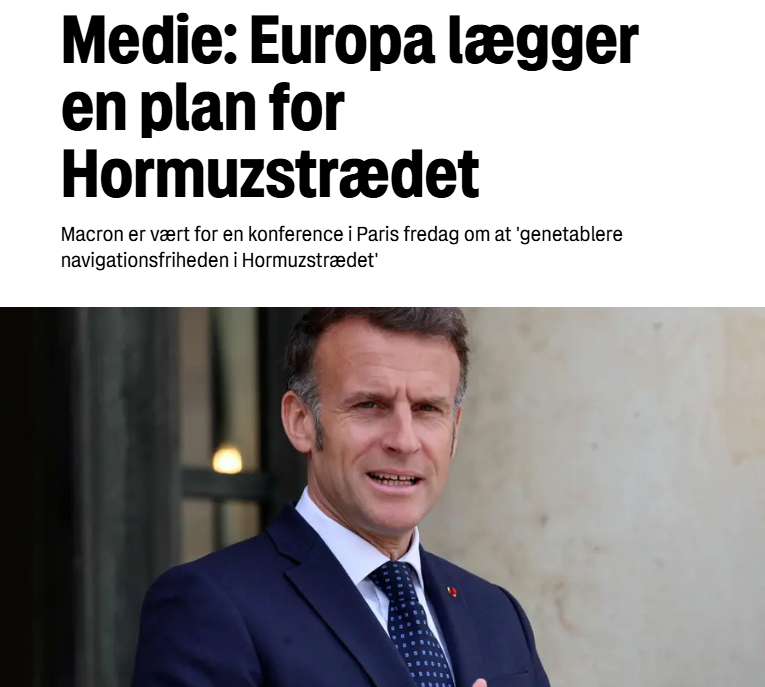
Thank you Trump!


Skriv et svar